
Global trade is becoming more complex every year.
Indian importers now manage larger shipment volumes, more suppliers, and stricter customs checks. Because of this, trade operations are becoming harder to handle manually. Even a small mistake can delay an entire shipment. A wrong HS code may lead to customs inspections, cargo delays, penalties, or higher duty payments.
As a result, many businesses are now using AI tools to improve trade operations and reduce compliance risks.
According to the World Customs Organization, product classification errors remain one of the leading causes of customs disputes in global trade.
Why HS Codes Matter
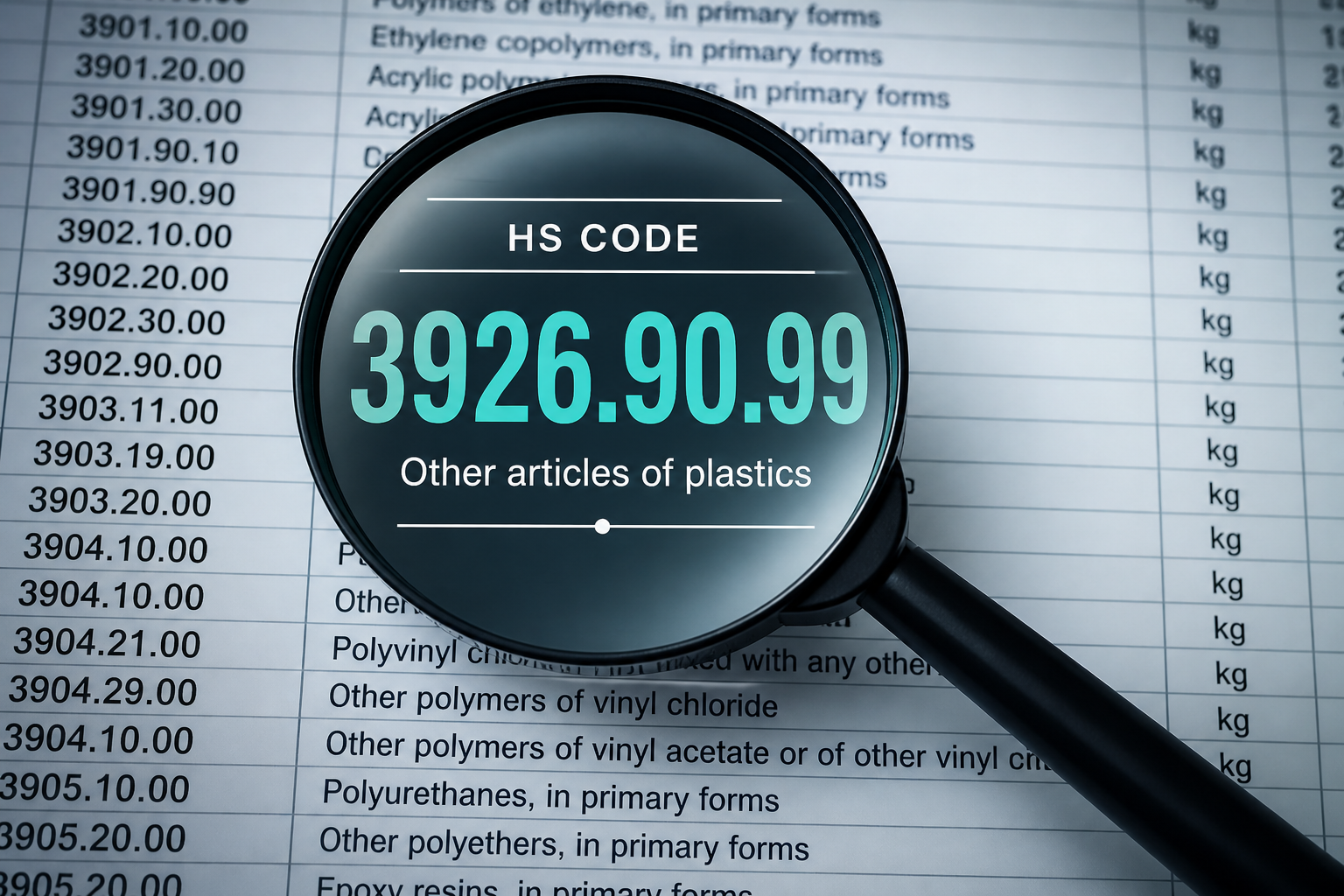
HS codes are used to classify products in international trade. Customs authorities use these codes to calculate duties, apply trade regulations, and monitor imports and exports. However, classification is not always simple.
Many products look similar but fall under different categories. Even a small change in a product description can affect the final code. Because of this, manual classification often creates errors. For businesses handling thousands of products, the process becomes slow and difficult to manage.
The Problem With Manual Classification
Many companies still depend on spreadsheets and manual reviews. Trade teams often search through large tariff databases to identify the correct classification.
This process takes time and increases the risk of mistakes.
In addition, tariff rules and product regulations change frequently. Therefore, businesses may continue using outdated codes without realizing it.
When classification errors happen repeatedly, customs authorities may increase shipment inspections and compliance checks.
Impact of Incorrect HS Classification
Issue | Business Impact |
Wrong duty payment | Higher import costs |
Customs inspection | Shipment delays |
Incorrect declaration | Compliance risk |
Repeated errors | Higher audit pressure |
Manual processing | Slower cargo clearance |
Even a small classification error can create financial and operational problems for importers.
How AI Classification Tools Work
AI-powered systems use machine learning and trade databases to recommend HS codes automatically.
The software studies product descriptions, shipment history, technical details, and customs rules before suggesting the most accurate code. Some advanced systems can also detect missing information, identify risky shipments, and flag inconsistent product descriptions.
As a result, businesses can process shipments much faster and with better accuracy.
Manual vs AI Processing Time
Process Type | Average Time |
Manual Classification | 15–30 Minutes |
AI-Based Classification | Less Than 2 Minutes |
AI tools can reduce processing time sharply. Therefore, trade teams can handle larger shipment volumes more efficiently.
Why Indian Importers Are Adopting AI
India’s import ecosystem is expanding quickly. Businesses now deal with more suppliers, changing tariff structures, and stricter compliance requirements.
At the same time, customs authorities are increasing digital monitoring and verification. Because of this, companies are under pressure to improve accuracy and reduce delays. AI tools help businesses improve customs readiness, lower manual workload, and strengthen audit preparation. Therefore, adoption is increasing across industries such as electronics, pharmaceuticals, automotive, chemicals, and machinery.
For example, electronics importers often manage thousands of product variations with different technical specifications. Manual classification at this scale becomes extremely difficult.
Why Customs Delays Still Happen
Many shipment delays are still caused by simple operational issues.
Incorrect HS codes, invoice mismatches, missing documents, and product description errors continue to create customs problems for businesses. In many companies, manual filing systems also slow down the review process.
Because of this, businesses are investing more in digital trade systems and automation platforms.
Trade Automation Is Growing Fast
Many Indian importers are increasing investment in AI-powered trade software, digital customs systems, and automated documentation tools.
According to McKinsey Operations Insights, global companies are investing heavily in automation to improve supply chain speed and operational visibility.
Similarly, Deloitte Global Trade Advisory notes that digital trade compliance systems are becoming critical as regulations become more complex.
Challenges Businesses Still Face
Although AI improves efficiency, implementation is not always easy.
Some companies still struggle with outdated ERP systems, disconnected trade data, and poor product information. In addition, highly technical or complex products still require human review before final classification. Therefore, most businesses currently use AI as a support tool instead of completely replacing compliance teams. Trade operations are becoming more digital every year.
In the future, AI systems may support automated customs filing, real-time compliance alerts, duty optimization, and predictive shipment analysis. As global trade becomes more complex, businesses will need faster and smarter systems to remain competitive.
Companies that modernize early will gain a major operational advantage. HS code classification may seem like a small process. However, it has a major impact on trade operations.
Incorrect classifications can create delays, penalties, and compliance risks. Because of this, Indian importers are increasingly using AI tools to improve speed, accuracy, and customs efficiency.
In the coming years, AI-driven trade systems will likely become a standard part of modern import operations.