
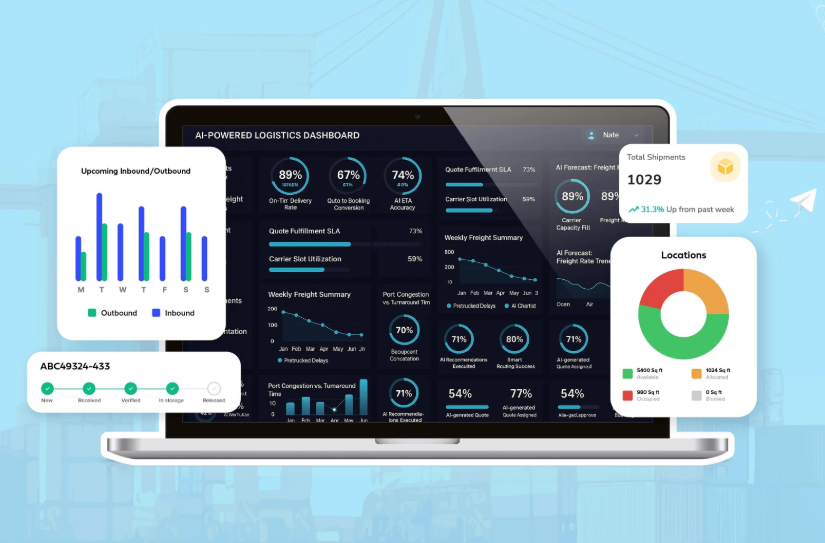
Artificial intelligence is becoming one of the most important technologies in global trade and logistics. Exporters, freight forwarders, customs consultants, and supply chain teams are increasingly relying on AI-driven systems to manage documentation, monitor compliance risks, automate shipment workflows, and improve operational visibility.
The growing complexity of international trade has accelerated this shift. Businesses now deal with constantly changing tariff structures, sanctions regulations, customs procedures, and documentation requirements across multiple jurisdictions. Manual processes are no longer sustainable for many export operations, especially for businesses managing high shipment volumes.
Industry discussions among logistics professionals show that document verification, customs filings, shipment updates, and compliance screening remain some of the most time-consuming operational challenges in freight forwarding. AI-powered automation is now helping companies reduce errors, speed up workflows, and improve trade accuracy.
Why AI Adoption Is Accelerating in Trade
Global trade operations generate enormous amounts of documentation. Commercial invoices, packing lists, bills of lading, certificates of origin, shipping bills, and customs declarations must all align perfectly to avoid delays and penalties.
Even experienced compliance teams can miss discrepancies under operational pressure. According to Liquidmind AI, document mismatches and compliance errors continue to be one of the largest causes of shipment holds, rejected drawback claims, and customs delays. The platform estimates that manual review systems still miss a significant percentage of export documentation issues.
AI platforms are increasingly solving these problems through:
automated document extraction,
AI-driven compliance screening,
HSN classification,
denied-party verification,
predictive logistics intelligence,
and workflow automation.
Leading AI Platforms for Exporters and Freight Forwarders
1. Liquidmind AI
One of the emerging AI-focused trade compliance platforms in India, Liquidmind AI builds AI agents specifically for international trade workflows, compliance management, and export documentation automation. Its ecosystem includes multiple products designed for exporters, freight forwarders, and compliance teams:
Patram AI helps users upload trade documents and instantly retrieve compliance-related insights across 190+ countries.
TradeGuard automatically cross-checks more than 40 document fields between shipping bills, invoices, and export documents to identify discrepancies before customs filing.
TradeVeda focuses on AI-powered trade compliance orchestration, sanctions monitoring, blockchain verification, and intelligent document workflows.
TradeGuard also screens shipments against global sanctions and denied-party lists including OFAC, EU sanctions, and UN lists in seconds, helping exporters reduce compliance risks significantly. For Indian exporters facing increasing scrutiny around customs filings, drawback claims, and sanctions compliance, platforms like Liquidmind AI are positioning themselves as operational infrastructure rather than standalone software tools.
2. Wisor AI
Wisor AI focuses heavily on freight forwarding operations. The platform automates freight quotations, customer communication, and shipment visibility while integrating with transportation management systems. Its predictive pricing capabilities help freight operators optimize margins and improve response times for customers.
3. Tarixo AI
Tarixo AI specializes in trade compliance intelligence. The platform automates denied-party screening, tariff analysis, HS code classification, landed cost calculation, and export compliance checks. It is increasingly being used by companies dealing with complex cross-border trade regulations.
4. Flexport
Known for combining logistics operations with technology infrastructure, Flexport has expanded into AI-powered customs audit tools, tariff optimization systems, and predictive shipment analytics. The company is investing heavily in automation to improve freight visibility and compliance workflows.
5. ShiprocketX
ShiprocketX recently introduced AI-powered HSN classification and duty estimation capabilities for Indian exporters. The platform aims to simplify cross-border shipping workflows while helping SMEs navigate tariff complexity and customs documentation.
6. DDAI-COMPLY
DDAI-COMPLY focuses on AI-driven trade compliance and risk management for commodity trading and cross-border operations. Its platform combines sanctions screening, vessel tracking, blockchain verification, and AI-powered document analysis to improve due diligence workflows.
How AI Is Reshaping Freight Forwarding
Freight forwarding is traditionally dependent on emails, spreadsheets, PDF documents, and repetitive manual coordination. AI systems are now transforming these fragmented workflows into automated operational pipelines.
One major shift is occurring in document processing. AI-powered OCR and large language models can now extract data from invoices, shipping bills, certificates, and scanned documents automatically. This significantly reduces manual data entry and lowers the risk of customs filing errors. Another major development is sanctions compliance automation. Exporters increasingly face regulatory risks linked to restricted entities, dual-use goods, and denied-party transactions. AI systems now continuously screen transactions against global sanctions databases and flag potential violations before shipments move.
Predictive shipment visibility is also improving rapidly. AI tools analyze port congestion, carrier schedules, customs activity, and weather disruptions to forecast delays and optimize freight planning.
The Human Oversight Challenge
Despite rapid innovation, most logistics professionals still prefer human review for critical trade decisions such as tariff classification, export licensing, sanctions interpretation, and customs valuation.
Community discussions around AI-driven compliance workflows consistently highlight the importance of combining AI automation with human oversight, especially when handling government submissions and regulatory filings. The most successful AI systems today are hybrid models where automation handles repetitive operational work while experienced compliance teams validate high-risk decisions.
The Future of AI in Trade
The next phase of global trade technology will likely move toward autonomous operational workflows powered by AI agents. Exporters may soon rely on AI systems to:
prepare export documentation,
identify tariff optimization opportunities,
monitor sanctions exposure,
generate compliance alerts,
coordinate freight milestones,
and automate customs filing preparation.
As global trade regulations continue becoming more dynamic, AI platforms are increasingly shifting from “productivity tools” into essential infrastructure for exporters and freight forwarders. Companies adopting these systems early are likely to gain advantages in operational speed, compliance accuracy, and supply chain visibility as international trade becomes increasingly data-driven.