
At 2:17 AM, a truck carrying fresh grapes left Nashik. For the farmer behind that shipment, this was not just another delivery. It was the result of weeks of effort working through unpredictable weather, rising fertilizer costs, and uncertain market prices. This single journey would decide whether the season ended in profit or loss.
By the time the sun rose, however, the fate of that truck had already moved beyond Nashik. It was no longer being shaped at the farm or even at the port. Instead, events unfolding far away in the Middle East had begun to influence its outcome, as tensions once again disrupted the flow of global trade.
Global Trade Is Not Global. It Is Personal.
This is what global trade looks like beyond headlines. Terms like “regional instability” and “supply chain disruption” may sound distant, but their impact is real. They travel across borders and affect people who have no direct link to the conflict, yet depend on its consequences.
For India, the Middle East is not just another trade partner—it is essential. Around 15% of India’s exports move through this region, while over 20% of imports come from it. It also supplies nearly 60% of the country’s crude oil.
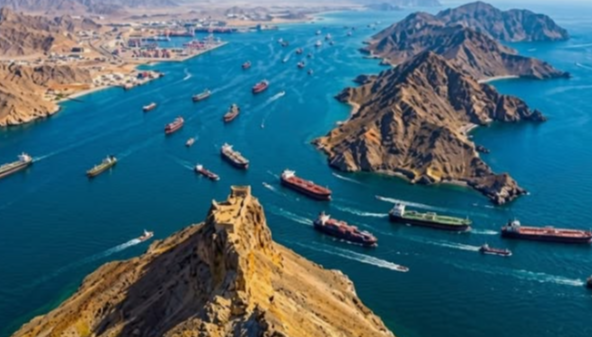
At the center of this network lies the Strait of Hormuz, a narrow passage through which nearly a quarter of the world’s oil flows. Even small disruptions here can push up fuel prices, increase freight costs, and raise insurance premiums.
These changes do not stay in global markets for long. They quickly reach Indian exporters, showing up in everyday decisions and directly affecting already thin margins.
The Ripple Effect No One Fully Sees
While numbers help explain the scale, they often miss the human side. Behind every statistic is a network of exporters, traders, and manufacturers making decisions under pressure, often without full clarity.
More than 4,500 exporters in India depend on trade routes linked to the Middle East. Many of them are small and medium businesses, where margins are tight. In such cases, even a 10–15% increase in freight costs can significantly reduce profits. Higher insurance costs make the situation even more difficult.
Delayed payments add to the challenge. They tie up working capital and create financial strain that spreads across the business.
The Hardest Part: Decisions Without Clarity
The real challenge is not just disruption—it is uncertainty in decision-making.
Exporters must constantly make difficult choices. Should they continue with existing routes despite rising risks, or switch to longer and more expensive alternatives? If costs increase, should they pass them on to customers and risk losing orders, or absorb them and reduce margins?
Another critical issue is HSN code classification. Even small errors in duty calculation can lead to overpayment, compliance risks, and lost profits.
Today, exporters manage far more than logistics. They deal with compliance, duties, tariffs, and pricing—all at once. In such an environment, even small mistakes can lead to large losses.
The bigger risk, however, is relying on outdated data and fragmented systems in a fast-changing world.
A Structural Shift in Trade
This is not a temporary disruption. It signals a deeper shift in how global trade works.
Uncertainty is no longer rare it is constant. Success now depends less on speed and more on the quality of decisions. Exporters who use better data and stronger systems will have a clear advantage.
This shift requires moving away from intuition-based decisions toward systems that bring together logistics, duties, compliance, and pricing in one place. The ability to test outcomes before acting is becoming essential.
From Uncertainty to Clarity : Role of Liquidmind
The question is no longer whether disruption will happen, but how prepared exporters are to deal with it.
They need to move from reactive decisions to informed ones, backed by real-time insights.
At LiquidMind, this shift becomes practical. Exporters can ensure accurate HSN classification, calculate duties correctly, and see complete landed costs before making decisions.
For example, an exporter can compare two shipping routes and instantly understand how costs, duties, and pricing will change. This makes it easier to choose the most efficient and profitable option. Traditional systems rarely provide this level of clarity.
By combining tariff intelligence, compliance workflows, and real-time cost simulation, LiquidMind helps reduce uncertainty and improve decision-making. It also enables Trade Promotion Councils to support exporters with better, data-driven insights.
Coming Back to the Beginning
That truck from Nashik will likely reach a port and move forward as planned. But its final outcome—profit, break-even, or loss will depend on the decisions made along the way.
Each of those decisions depends on one thing: clarity.
In today’s world, the biggest risk is not volatility itself. It is making decisions without clear information.
The exporters who succeed will not always be the largest or the fastest. They will be the ones who understand that in global trade, intelligence is no longer optional it is essential infrastructure.