
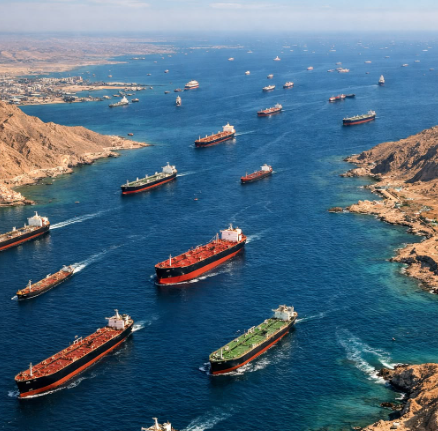
The Red Sea crisis is changing global trade. As a result, Indian exporters are facing serious challenges. Shipping costs are rising. Delivery times are getting longer. Supply chains are also becoming less stable. What started as a regional conflict is now affecting businesses around the world.
Many cargo ships that once used the Red Sea route are now avoiding it. Instead, they are taking a longer route around South Africa. Because of this, shipments are arriving late and transport costs are increasing.
For Indian exporters, this creates both financial and operational pressure.
Why the Red Sea Route Matters
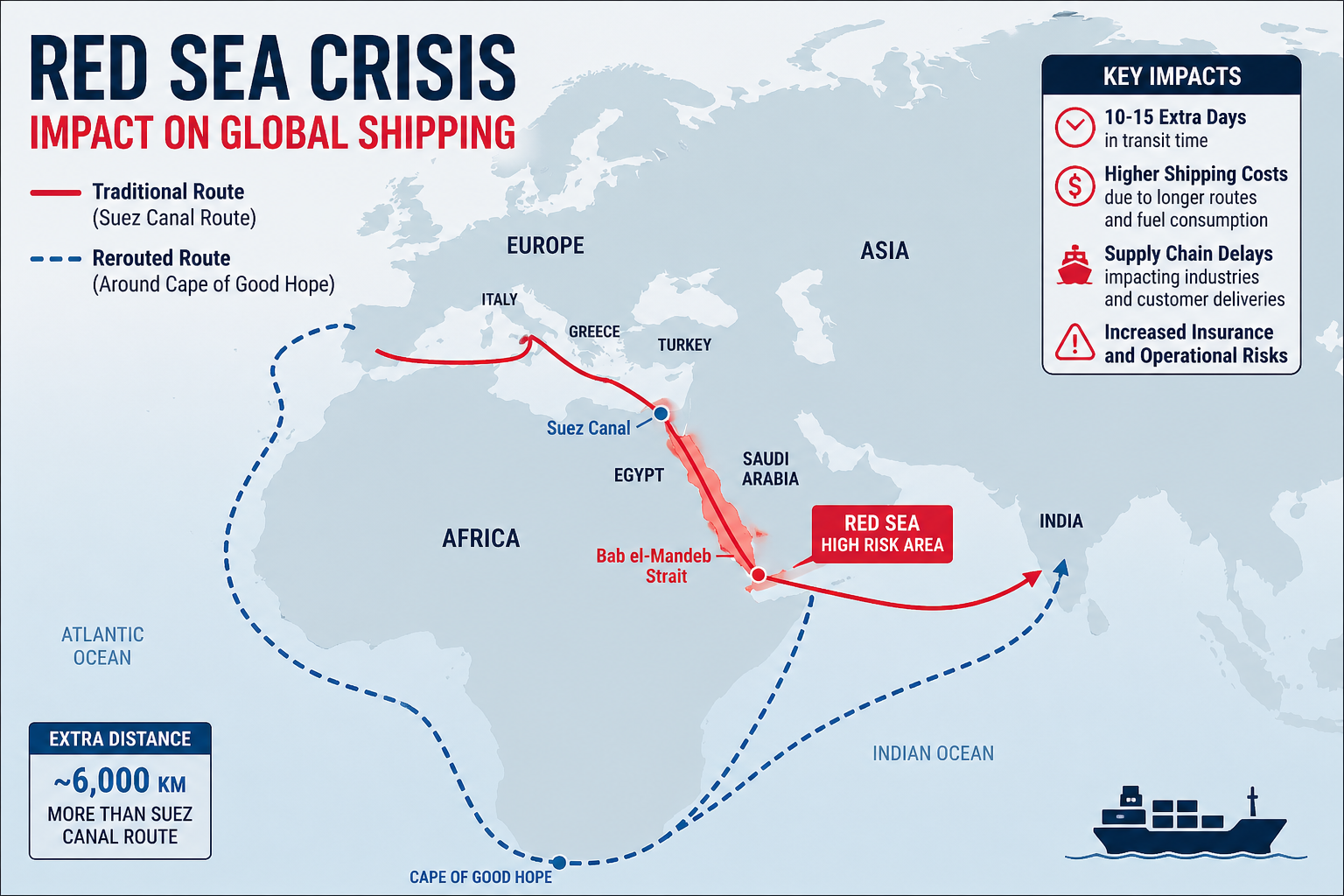
The Red Sea is one of the world’s most important shipping routes. A large share of India’s trade with Europe passes through this region. However, ongoing security risks have disrupted normal shipping movement.
As a result, shipping companies are changing their routes. The new route around the Cape of Good Hope adds many extra days to delivery schedules. This affects industries such as:
textiles
pharmaceuticals
engineering goods
chemicals
auto parts
Therefore, many exporters are now dealing with delays and higher logistics costs.
Freight Costs Are Increasing
Longer shipping routes increase operating costs. Shipping companies are now spending more on:
fuel
insurance
vessel operations
crew expenses
Because of this, freight rates have increased across global markets. In addition, fewer vessels are available on key trade routes. This is pushing prices even higher. For many Indian exporters, profit margins are shrinking. Small businesses are under the most pressure because they have fewer financial resources.
Delivery Delays Are Affecting Businesses
Late shipments create many problems for companies. For example, businesses are facing:
inventory shortages
production delays
missed deadlines
cash flow pressure
Many factories depend on timely cargo arrivals. However, delayed shipments are making production planning difficult. As a result, some companies are changing their sourcing and inventory strategies.
Transit Times Have Increased
Route | Average Transit Time |
Red Sea Route | 18–22 Days |
Cape of Good Hope Route | 30–40 Days |
Source: Mint Logistics Report
The longer Africa route is adding extra shipping time. Therefore, businesses must now prepare for slower deliveries.
Compliance Risks Are Growing
The crisis is not only affecting logistics. It is also increasing compliance risks. When routes change, companies must update trade documents carefully. These documents include:
bills of lading
invoices
customs declarations
certificates of origin
Even small mistakes can create delays. For example, companies may face:
customs inspections
cargo holds
shipment delays
penalties
However, many businesses still use manual systems and spreadsheets. During disruptions, these systems become harder to manage.
Companies Need Better Trade Visibility
Global trade is changing quickly. Therefore, businesses need better visibility into their supply chains. Companies now want real-time updates on:
shipping delays
port congestion
freight costs
customs risks
route changes
As a result, many firms are investing in:
shipment tracking systems
digital trade tools
AI-based analytics
automated compliance software
These tools help companies react faster and reduce risk.
What This Means for India
India wants to become a stronger export and manufacturing hub. However, growth depends on reliable logistics and efficient trade systems. The Red Sea crisis shows why supply chain resilience matters.
In the future, businesses will need:
better planning
smarter trade systems
faster compliance processes
stronger logistics networks
Companies that adapt quickly will gain a competitive advantage. The Red Sea crisis is now affecting global trade and Indian exporters. Freight costs are rising. Delivery times are increasing. Supply chains are under pressure.
At the same time, compliance risks are becoming more serious. Because of this, businesses must improve planning, visibility, and trade operations.
Companies that build stronger systems today will be better prepared for future disruptions.